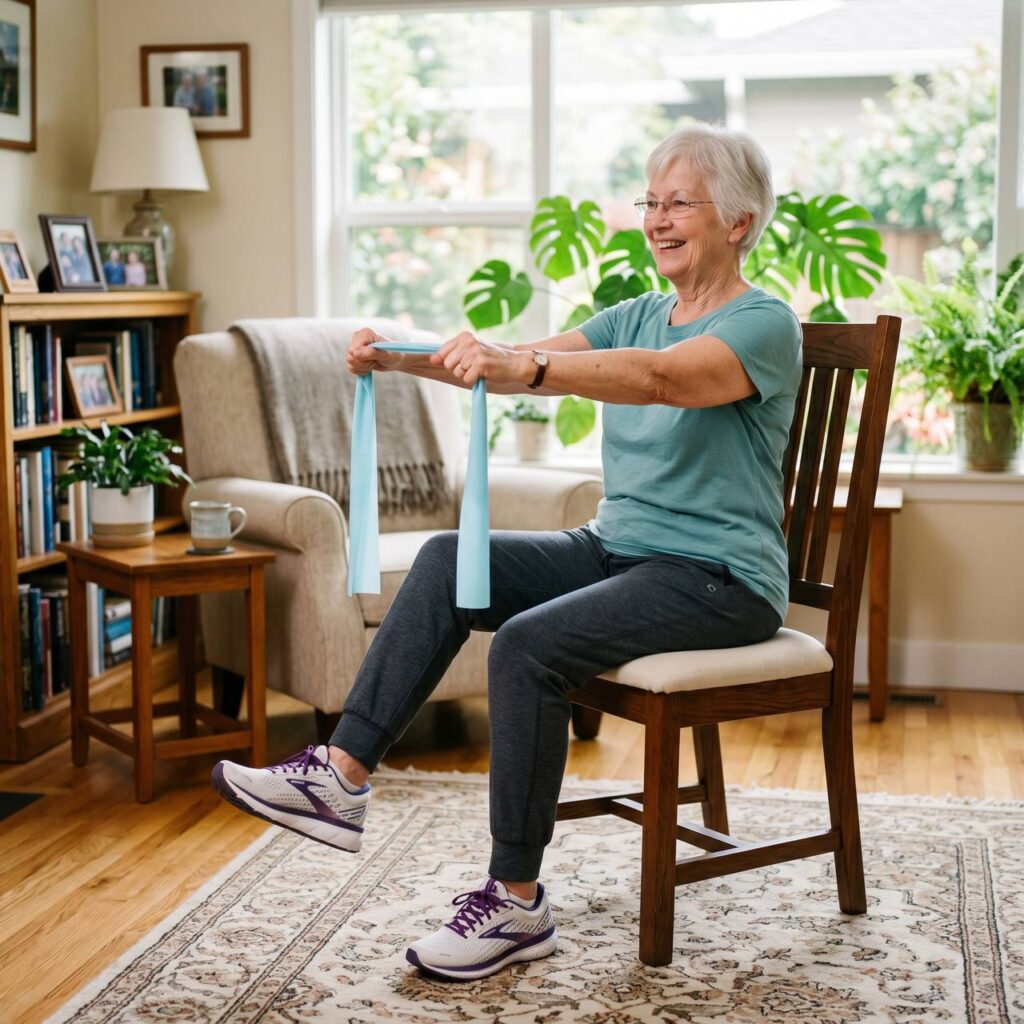
Chair exercises for seniors are one of the easiest ways to stay active without intense gym sessions or high-impact workouts. For older adults, this safe, low-impact approach helps build strength, improve balance, and stay mobile — all without ever leaving the seat.
Whether you’re recovering from an injury, managing joint pain, or simply prefer a gentler approach to fitness, this sit-down workout guide walks you through ten exercises you can do at home, in just 15–20 minutes a day.
Why Chair Exercises Are Ideal for Seniors
Chair-based workouts reduce the risk of falls while still delivering real fitness benefits. They’re particularly helpful for:
- Building lower body and core strength without standing balance challenges
- Improving circulation and joint flexibility
- Maintaining independence in daily activities like standing up, climbing stairs, or carrying groceries
- Easing back into movement after illness, surgery, or a sedentary period
Important: Always talk to your doctor before starting any new exercise routine, especially if you have a heart condition, recent surgery, or chronic joint pain.
What You’ll Need
- A sturdy, armless chair that doesn’t roll or swivel (placed against a wall for extra stability if needed)
- Comfortable clothing and supportive shoes
- Optional: a light resistance band or small hand weights once you’re ready to progress
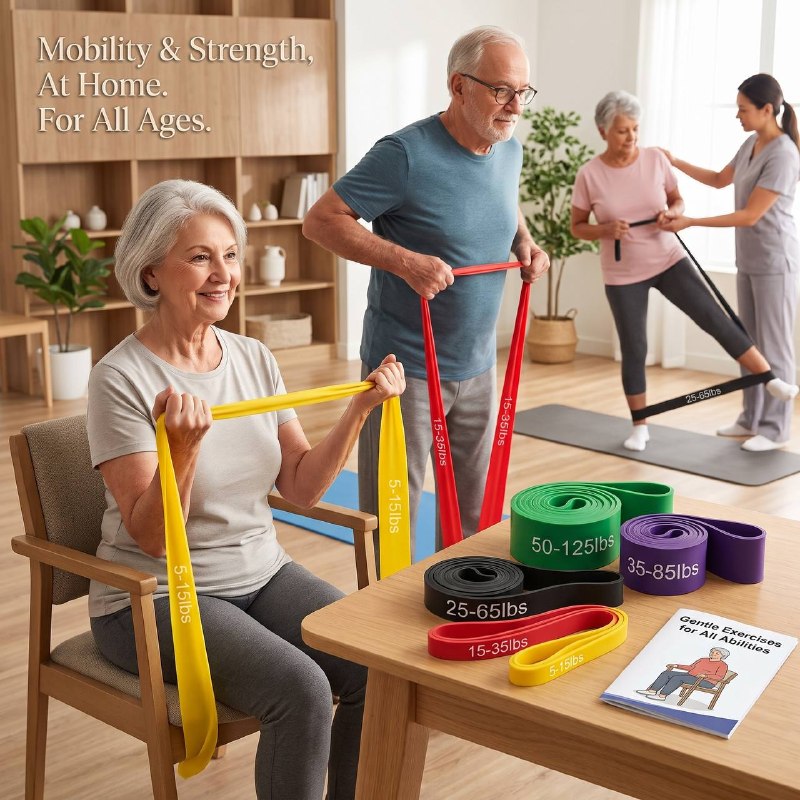
You can get a suitable and comfortable resistance band here: https://amzn.to/4oINLI0
When you make a purchase through these links, I may earn a small commission at no additional cost to you.
The 10 Best Chair Exercises for Seniors
1. Seated Marching
Sit tall, lift one knee toward your chest, lower it, then switch legs. This warms up your hips and gets your heart rate up gently.
Reps: 10–15 per leg
2. Seated Knee Extensions
Extend one leg straight out in front of you, hold for 2 seconds, then lower. This strengthens the quadriceps, which supports knee stability.
Reps: 10 per leg
3. Seated Torso Twists
Sit with your arms crossed over your chest, and gently rotate your upper body left and right. Great for core mobility and spinal flexibility.
Reps: 8–10 per side
4. Chair Squats (Sit-to-Stand)
Stand up from the chair without using your hands, then slowly sit back down. This is one of the most functional exercises for maintaining independence.
Reps: 8–10
5. Seated Calf Raises
Keeping your toes on the floor, lift your heels up and down. This improves circulation and ankle strength — useful for fall prevention.
Reps: 12–15
6. Overhead Arm Raises
While seated, raise both arms overhead, then lower. Add light hand weights for extra resistance once comfortable.
Reps: 10–12
7. Seated Shoulder Blade Squeezes
Pull your shoulder blades back and together, hold for 3 seconds, then release. Helps counter the forward-hunched posture common with age.
Reps: 10
8. Ankle Circles
Lift one foot slightly off the ground and rotate the ankle in circles, both directions. Keeps joints flexible and reduces stiffness.
Reps: 10 circles each direction, per foot
9. Seated Side Leg Raises
Lift one leg out to the side, keeping it straight, then lower. Strengthens the hip muscles that help with balance.
Reps: 8–10 per leg
10. Seated Forward Reach (Stretch)
Reach both arms forward slowly, feeling a gentle stretch through the back and shoulders. A relaxing way to end the routine.
Hold: 15–20 seconds, repeat 3 times
Tips to Stay Consistent
- Start with just 2–3 exercises if you’re new, and build up gradually
- Do the full routine 3–4 times per week for best results
- Keep a water bottle nearby and take breaks as needed
- Track your progress in a simple notebook or calendar — small wins add up

You can get a suitable and comfortable exercise mat here:https://amzn.to/4uTr4Cr
When you make a purchase through these links, I may earn a small commission at no additional cost to you.
Frequently Asked Questions
Are chair exercises safe for seniors with arthritis?
Yes, in most cases. Chair exercises are low-impact and gentle on joints, but always check with your doctor or physical therapist first, especially during flare-ups.
How often should seniors do chair exercises?
Most experts recommend 3–5 sessions per week, with rest days in between for recovery.
Can chair exercises help with balance?
Yes. Exercises like seated marching and side leg raises strengthen the muscles that support balance, which can reduce fall risk over time.
Final Thoughts
You don’t need a gym membership or fancy equipment to stay strong and mobile as you age. A sturdy chair, a few minutes a day, and consistency are all it takes to start seeing real improvements in strength, balance, and confidence.
Disclaimer: This article is for informational purposes only and is not a substitute for professional medical advice. Consult your physician before beginning any new exercise program.